The question of VASP approval often raises concerns. You are probably wondering if this process is essential after converting your commercial vehicle? Don’t worry, we help you clarify this crucial point.
The answer is simpler than it seems. By the end of this article, you will be able to make an informed decision on the subject: whether or not to undertake this approval procedure?
We will detail the situations where the DREAL mandatorily requires VASP approval, and those where you might possibly do without it.
The criteria that require VASP approval
To obtain a VASP Caravan approval, your vehicle must meet specific requirements. This rule also applies if you are considering VASP approval for an ambulance or a fire truck, although the criteria differ depending on the category targeted.
It is crucial to understand that all these classifications (VASP, CTTE, VP, etc.) appearing on line J1 of the registration document have a specific purpose: to ensure that the vehicle’s identification documents accurately reflect its configuration and actual use.
Imagine a converted van that has all the features of a Motorhome but whose registration document classifies it as a goods transport vehicle (CTTE). In certain situations, complications could arise during your travels. The principle is the same for vans: consistency is essential!
To be classified as a Motorhome, your vehicle must strictly meet 5 specific criteria, defined in the European directive 2007/46/EC (section 5.1). This regulation states that vehicles intended for habitation must be equipped with the following elements in their living space:
- A convertible bench seat (fixed beds are allowed in 99% of cases)
- A kitchen area with a fixed cooking element
- Seating places
- Storage spaces
- Everything must be immovable.
All of this equipment must be permanently fixed to obtain the Motorhome classification.
If your layout meets these conditions, the VASP approval procedure then becomes mandatory. We will discuss later in this article the potential consequences of not complying with this obligation.
Today, simply removing an element (like the kitchen area or the table and seats set) is often used as a reliable solution to pass the technical inspection peacefully since the vehicle does not meet all the requirements to be classified as VASP.
Is VASP approval essential to remain compliant with the law?
There is a legal alternative to VASP approval! The key lies in keeping your van below the criteria that would classify it as a Motorhome. To legally drive a converted van without going through the dreal VASP approval process, here are the essential points to respect:
- A minimalist van layout
Let's take the example of a vehicle where the layout consists mostly of removable elements: this allows the vehicle to pass the technical inspection without difficulty.
To legally keep a CTTE registration (van), modifications must remain moderate.
Below is a summary table detailing the authorized modifications and those to avoid to remain compliant without requiring VASP approval:
| YOU WILL BE ABLE TO | YOU WILL NOT BE ABLE TO |
| Insulate your vehicle | Install a fixed cooking system
|
| Install an interior lining | Install a pop-up roof (especially for L1H1 vans like the Transporter T5) |
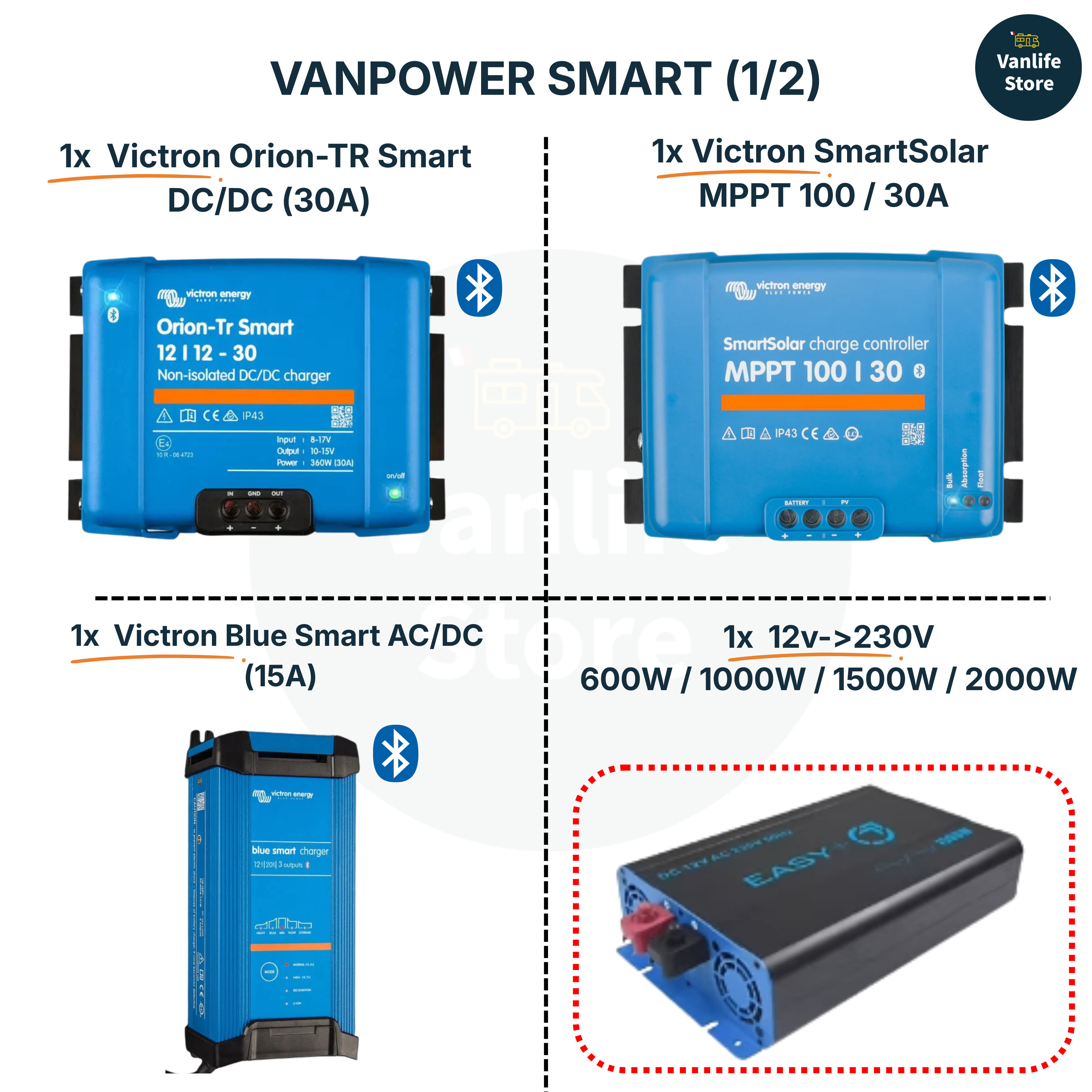
| Install a complete electrical system (including solar panels) | Install a Gas heating system |
| Installer of openings (windows, roof vents, ventilation systems, etc.) | Installing a water heater operating with hazardous materials (gas, diesel...) |
| Installing a work surface (without a fixed cooking point) | Gas installation is generally refused during technical inspections without appropriate VASP approval (Motorhome or food truck) |
| Building furniture elements (It is recommended to favor easily removable installations) |
IMPORTANT NOTE: This list is not exhaustive and it should be noted that the assessment remains highly dependent on the technical inspection center.
It is advisable to contact one or more centers beforehand, explaining the situation, and you will get an initial opinion from the inspector. However, some technical inspection centers can be particularly strict if they detect signs of sleeping arrangements. In case of dispute, do not hesitate to assert your rights by citing directive 2007/46/EC mentioned earlier. Inspection centers cannot interpret regulations at their own discretion!
- The question of the separating partition:
A crucial point! If you keep the CTTE status without going through the DREAL VASP approval, your vehicle must remain dedicated to goods transport. In this case, removing the separating partition is subject to restrictions (unlike VASP approval, which allows its removal with the manufacturer’s consent if it concerns the structure). For a van retaining its CTTE status, here are the rules:
- For vehicles from 2012 or newer, the original partition must be retained
- For vehicles manufactured before 2012, removal is allowed
We have not found any official documentation confirming this information provided by the insurance and the DREAL. However, given the credibility of these authoritative bodies, we consider this information reliable. The primary function of the partition being to prevent the movement of goods forward, this logic seems consistent (even if the origin of the date remains mysterious). In the context of a VASP approval, removing the partition is possible because AFNOR standards require a layout that ensures the safety of all users, notably by preventing installations from endangering the driver and passengers.
Here are our recommendations regarding the separating partition:
- Favor common sense: if removing the partition requires modifications that compromise the vehicle's structural integrity, keep it or seek the manufacturer's authorization.
- For vehicles post-2012, we recommend obtaining written authorization from the insurance, ideally accompanied by the manufacturer's agreement.
It is important to note that neither the DREAL nor the technical inspection will penalize you whether you keep or remove the partition. This decision essentially depends on your INSURANCE!
Additional note: The partition in the van remains a very good way to secure your vehicle and thermally insulate it. When you install locks (Méroni type) on the side door and rear doors, with a partition there will be no possible intrusion to the rear of the vehicle from the front doors. There will also be fewer thermal bridges from the front windshield to the rear of the vehicle, the windshield being one of the hardest parts to insulate.
What are the consequences if I do not approve my van even though it is converted into a Motorhome?
If your van is converted into a Motorhome without going through the VASP approval, there is a discrepancy with its registration certificate! This situation can cause major complications, especially during the technical inspection, where you risk a categorical refusal, or worse, serious repercussions regarding your insurance. It would be particularly unfortunate to be denied reimbursement in case of an accident, simply for neglecting the RTI file procedure, wouldn't it?
It is important to specify that we are only dealing here with the implications of a lack of approval for a vehicle that meets all the criteria of a Motorhome!
Note also that some insurances cover the vehicle based on the use the insured makes of it and not only on the basis of the registration document. Contact your insurer to learn more about these terms.
Some insurances cover the vehicle based on its use, which can be a solution to be properly insured!
Consequences at the technical inspection
Presenting a converted van without VASP approval, or with an incorrect mention (such as VASP ambulance), while it is configured as a Motorhome, will systematically result in rejection. This is certain. Even if you find a lenient technical inspection center, you expose yourself to significant risks with your insurance.
Is VASP approval mandatory for a van?
VASP approval is necessary if your converted van meets specific criteria. This ensures the vehicle complies with safety and usage standards.
What criteria require VASP approval?
To be approved, your van must have fixed equipment such as a table, a sleeping system, and a kitchen. These elements must be permanent and comply with standards.
What are the consequences of not getting approval?
Without approval, your van may be refused at the technical inspection and your insurance might not cover damages in case of an accident. This can lead to financial complications.
How to legally avoid VASP approval?
To avoid approval, keep your layout minimalist and avoid fixed installations. Make sure your vehicle remains classified as CTTE to also be allowed on the road.
What are the mandatory elements to be in VASP?
To be required to switch to VASP, you must:
- A convertible bench seat or a fixed bed
- A kitchen area including a fixed cooking element
- Seating places.
- Upper or lower storage compartments
- Everything must be fixed
What is the cost of a VASP approval
The cost of a VASP approval varies between €700 and €1500 depending on the parts of the file you handle yourself and the certification bodies you use