Lithium LiFePO4 12V Lithtech Self-Heating Battery — The only battery that charges even in extreme cold (100Ah / 200Ah / 314Ah)
The Achilles’ heel of all classic lithium batteries is winter. As soon as the temperature drops below 0 °C, charging becomes impossible — your BMS cuts off power to protect the cells, and your solar panels, alternator or mains charger become useless. Result: van stuck at the ski resort, motorhome stopped at the refuge, autonomy collapsing at the first frost.
The Lithtech 12V LiFePO4 self-heating range solves this problem at its source. An internal heating system controlled by the BMS automatically warms the cells before and during charging as soon as the temperature drops, so your battery keeps accepting energy in mid-winter — without your intervention, without external accessories, without risk to the cells.
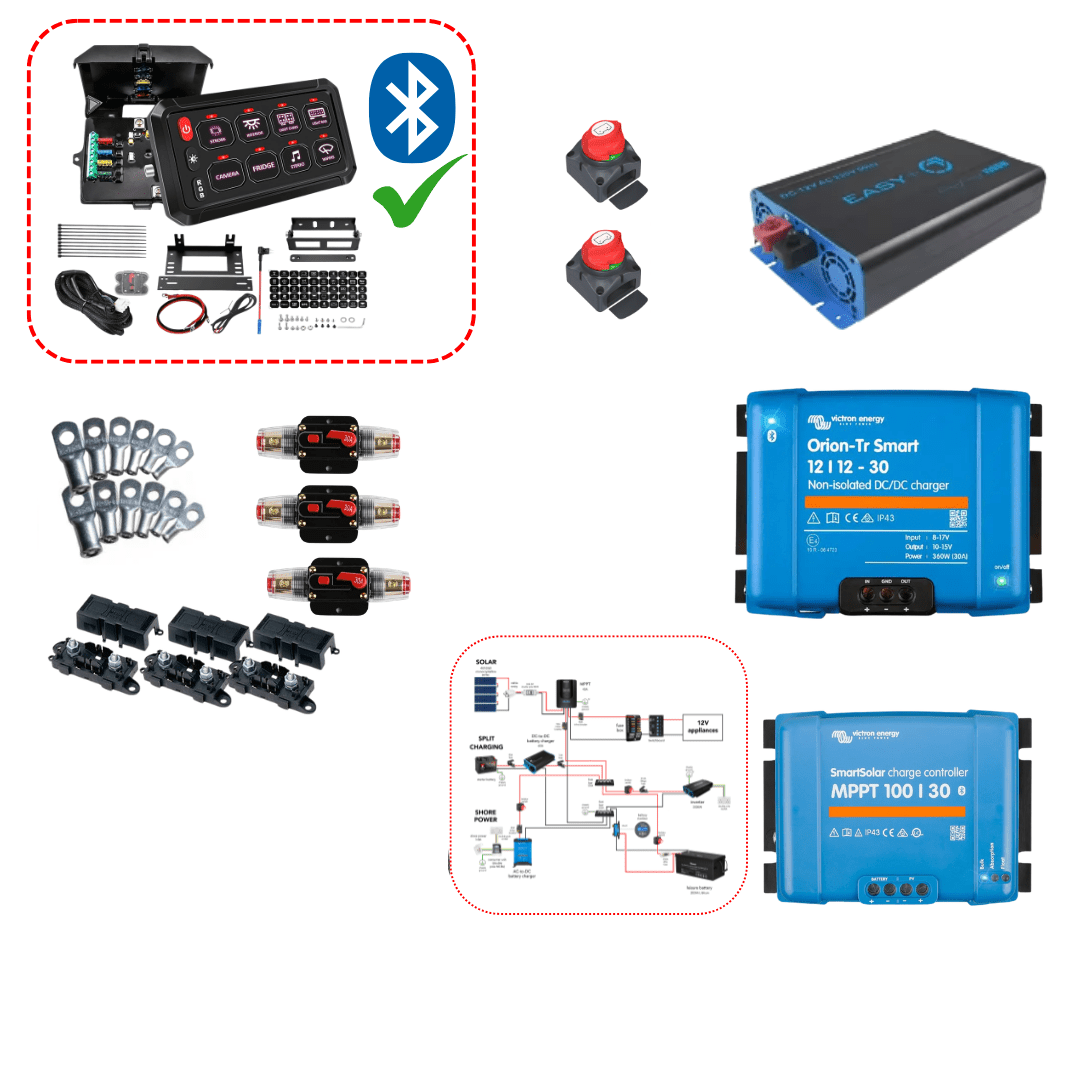
Available in 100Ah, 200Ah and 314Ah, certified R10, compatible with Victron, EcoFlow, Renogy, Carbest. Also available in a complete electrical kit with DC/DC, MPPT, AC/DC, distribution box and fuses.
Why choose the self-heating version
-
Charging possible even in mid-winter — built-in heater warms the battery when it’s too cold to be charged. Essential above 1500 m altitude, for ski seasons, winter in the mountains, or simply freezing nights in the wild.
-
100% automatic activation — the BMS manages it alone. When the temperature drops below 15 °C during charging, the heater turns on; it stops automatically at 15 °C. You don’t have to do anything.
-
Cell protection guaranteed — below 0 °C, normal charging is blocked by the BMS to prevent "lithium plating" which permanently damages a LiFePO4. Only the heater remains active, until a safe threshold is reached before resuming charging.
-
All the benefits of LiFePO4 — up to 6,000 cycles, discharge up to 95% of usable capacity (compared to only 50% in AGM/gel), weight halved, almost no maintenance.
-
Integrated smart BMS — short-circuit, overload, deep discharge, over/under-temperature protection, automatic cell balancing, Bluetooth monitoring via iPhone and Android app.
-
Compatible with stationary heaters — Webasto, Planar, Eberspächer: the autonomy needed to use them without prematurely aging the battery.
Who this battery is for
If you use your van or Motorhome only in mild seasons, the standard version is sufficient. If you go skiing, sleep at altitude, drive in winter, park in the mountains for several days, or if your vehicle sleeps outside in cold regions, the self-heating version is not a luxury — it is the only way to ensure your system keeps working when the temperature drops.
This is also the recommended version if you rely on solar panels in winter (the panels produce in cold, but a frozen battery accepts nothing) or on alternator charging during early morning winter drives.
How the integrated heater works
The heating system is controlled by the BMS and only activates during charging, to never draw unnecessarily from the battery. Three scenarios:
Above 15 °C — classic charging, the heater remains inactive.
Between 0 °C and 15 °C — the battery is charged and heated simultaneously. As soon as the internal temperature reaches 15 °C, the heater stops automatically and charging continues normally.
Below 0 °C — classic charging is disabled to protect the cells. Only the heater is powered, until the battery reaches a safety threshold (≈ 5 °C, configurable). At that point, charging resumes with heating in parallel, until 15 °C stops the heating.
This regulation is the reason why your solar panels, your DC/DC booster, or your mains charger continue to power the system in winter: the energy is first used to warm the cells, then to charge them — instead of simply being wasted.
Technical specifications
Common to all three capacities
- Chemistry: Lithium iron phosphate (LiFePO4), prismatic cells
- Nominal voltage: 12.8 V
- Energy efficiency: 99 %
- Internal resistance: ≤ 30 mΩ @ 50 % SOC
- Self-discharge: ≤ 3.5 % / month
- Lifespan: up to 6,000 cycles
- Connectivity: Bluetooth (iOS and Android app)
- Integrated heater function: automatic activation during charging below 15 °C
- Integrated BMS: short circuit, overload, overdischarge, overcurrent, over/under temperature, cell balancing
- Recommended charging voltage: 14.2 – 14.6 V
- Recommended charging current: 5 A – 50 A
- Maximum charging current: 100 A
- BMS cutoff on charge: 15.0 V (3.75 ± 0.1 V/cell)
- Reconnection voltage: 14.6 V (3.65 ± 0.1 V/cell)
- Balancing voltage: 14.0 V (3.5 ± 0.025 V/cell)
- Balancing current: 35 ± 5 mA
- Terminals: M8 / M6
- Case: reinforced anti-vibration ABS
- Temperature range: discharge −20 to 60 °C, charge with integrated heater active below 0 °C, storage −5 to 35 °C
- Certifications: R10, CE, UN38.3, IEC62133
Lithtech 12V 100Ah self-heating
- Energy: 1280 Wh
- BMS: 100 A
- Protection rating: IP67
- Dimensions: 41 × 24 × 17 cm
- Weight: 10.0 kg
- Max modules in parallel: 2
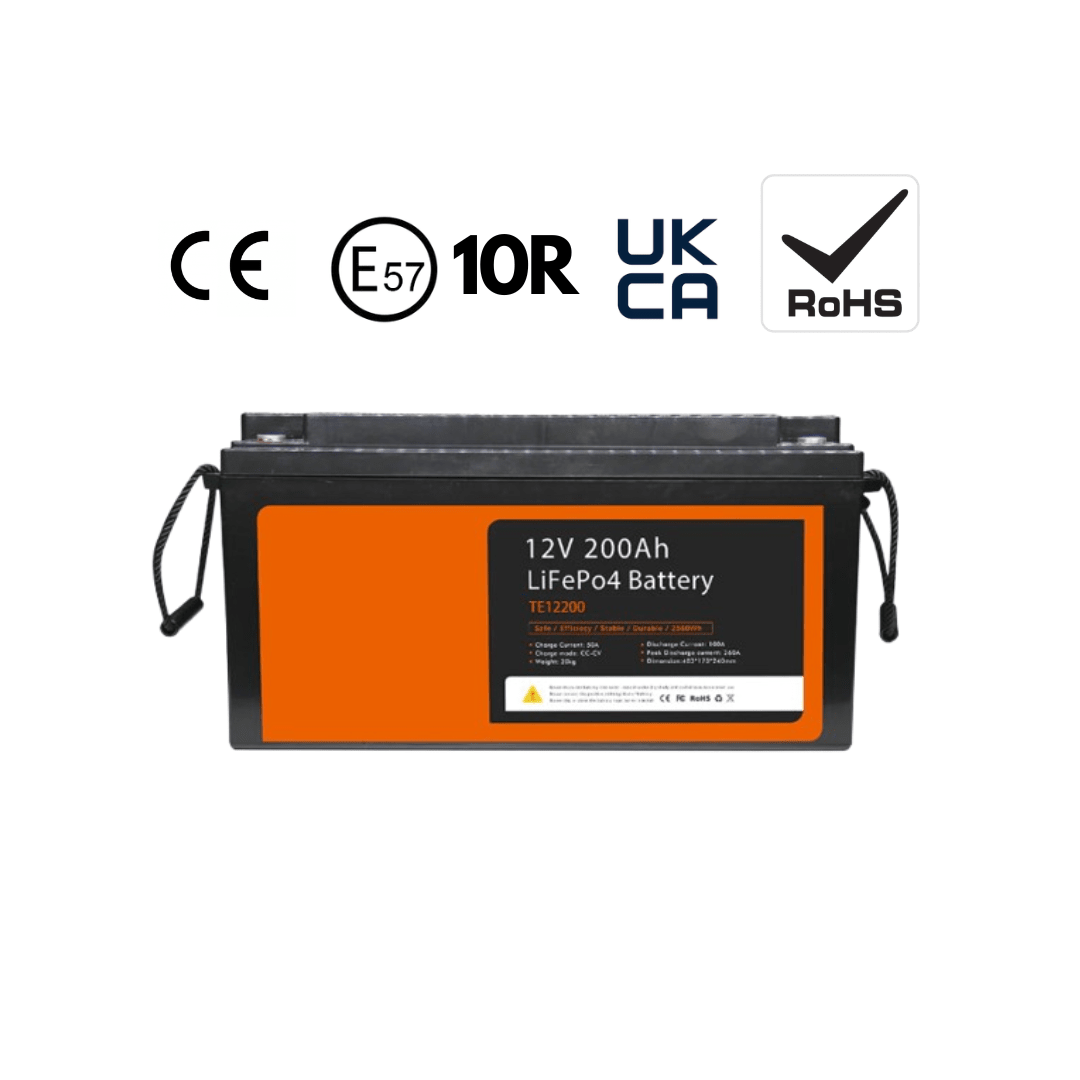
Lithtech 12V 200Ah self-heating
- Energy: 2560 Wh
- BMS: 100 A
- Protection rating: IP55
- Dimensions: 49 × 24 × 17 cm
- Weight: 20.0 kg
- Max modules in parallel: 4
Lithtech 12V 314Ah self-heating
- Energy: 3840 Wh
- BMS: 200 A
- Protection rating: IP65
- Dimensions: 52 × 27 × 22 cm
- Weight: 28.0 kg
- Max modules in parallel: 6
Use cases that justify the self-heating version
-
Vanlife at the ski resort — your van sleeps outside at −10 °C, you leave in the morning with the alternator: the battery accepts the charge from startup, without limitation.
-
Motorhome at altitude — bivouacs above 1500 m, active solar panels, negative temperatures at night: the morning panel warms the battery before recharging it.
-
Winter outdoor parking — no heated garage, no power outlet: the battery protects itself and remains operational on waking.
-
Boat or unheated cabin — installations left in place during winter, clean restart in spring.
-
Stationary heater coupling — Webasto, Planar, Autoterm: the battery powers the heater at night and accepts solar recharge in the morning, without going into safety mode due to cold.
Your questions, the real answers
How much does the heater consume from the battery? The heater only activates during charging: the energy warming the cells comes from the charger (solar panels, alternator, mains) — not the battery. No drain in storage, no surprises on waking.
What if I have no charging source available and it’s −10 °C? The battery remains usable in discharge down to −20 °C — lighting, fridge, stationary heater continue to operate. Only charging requires preheating.
Can I disable the heater? The heater is automatically controlled by the BMS. No intervention is needed, no button to press. That’s exactly the point: so you don’t have to think about it.
Concrete difference with a classic LiFePO4 in winter? A standard LiFePO4 will refuse charging below 0 °C — your solar panels produce, your alternator runs, and nothing goes into the battery. The self-heating version uses this energy to warm the cells first, then to charge them. The difference is immediately visible on the Bluetooth app.
Different installation? No. The dimensions, M8/M6 terminals, and wiring are identical to the standard version. The heating function is fully integrated into the battery — nothing extra to wire.
Technical resources
Winter is no longer a limit
If your layout needs to work all year round — in the mountains, at altitude, skiing, or simply during freezing nights — the self-heating version is not over-equipment, it’s the guarantee that your system keeps producing and storing when others stop. Choose the capacity that fits your project (100Ah, 200Ah or 314Ah) and complete your layout with the battery that doesn’t fail in winter.